Somalia’s political dispute deepens over elections and governance
MOGADISHU Somalia’s federal government is facing renewed political criticism over elections, constitutional changes and relations with regional actors, as disagreements continue over the country’s political direction.
The dispute comes after Somalia’s parliament approved constitutional amendments in March 2026 that could delay elections and extend the terms of federal institutions. The changes triggered opposition from political figures who questioned the process and its implications for the country’s electoral transition.
The dispute over Somalia’s elections

Somalia has been working toward a transition to universal suffrage, but disagreements over the electoral system and constitutional changes have complicated the process.
The European Union Agency for Asylum reported that Somalia’s political environment remained highly divided in 2026, with disagreements over the electoral model and the constitutional changes affecting the terms of federal institutions.
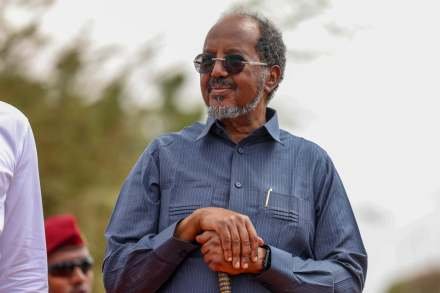
The federal government has defended its efforts to establish a one-person, one-vote system. In a May government briefing, officials said President Hassan Sheikh Mohamud was continuing efforts related to democratic transition, state-building and the implementation of universal suffrage elections.
It would therefore be misleading to describe Somalia simply as having had “no elections.” Federal elections have faced delays and political disagreements, while electoral processes have taken place at subnational levels. A UN report, for example, documented one-person, one-vote district council elections held in Puntland in July 2024.
Mukhtar Robow and his former US reward

Another issue raised in criticism of the federal government concerns Minister of Endowments and Religious Affairs Mukhtar Robow Ali, also known as Abu Mansur.
The U.S. State Department announced in 2012 that its Rewards for Justice program was offering up to $5 million for information leading to Robow’s location. At the time, he was described by the U.S. government as a senior al-Shabaab leader.
However, the reward was later withdrawn. The Associated Press reported in 2017 that Robow had been removed from the State Department’s Rewards for Justice list following consultations with the Somali government.
There is an important distinction between that reward program and U.S. sanctions. The Treasury Department’s records show that Robow was designated as a Specially Designated Global Terrorist in 2008.
Somalia’s official cabinet website currently lists Robow as the federal minister responsible for religious affairs.
Somaliland and Mogadishu’s political debate

The political dispute in Mogadishu is also connected to relations between the federal government and Somaliland.
Somaliland has continued to pursue international relations independently, while Somalia’s federal authorities oppose diplomatic initiatives that they say challenge the country’s territorial integrity. Reuters reported in June that Somaliland had expanded its engagement with Taiwan despite objections from Somalia and China.
Somali and Somaliland delegations have also pursued competing diplomatic efforts in Washington as debate over U.S. policy toward Somaliland has intensified. Somali officials have said they are engaging Washington on territorial integrity, security and the country’s strategic relationship with the United States.
Claims that the federal government is deliberately using the Somaliland issue to conceal poor governance are political allegations. The available evidence does not independently establish that this is the government’s purpose.
A broader debate over government performance

Assessments of the federal government’s performance differ sharply. Government officials point to security operations, institutional reforms, electoral preparations and international engagement, while opposition figures and critics have focused on political disputes, electoral delays and tensions with some federal member states.
The United States has also expressed growing concern about Somalia’s governance and security environment. Reuters reported in September that Washington agreed to allow the United Nations another year to wind down logistical support for the African Union mission in Somalia, while maintaining its position that it would not continue supporting the UN Support Office in Somalia after the transition period.
The debate therefore extends beyond domestic politics and has implications for Somalia’s relations with international partners and for the future of international security support.
The post Elections, the Constitution, and Somaliland: What Is Happening in Mogadishu? first appeared on Radio Dalsan.