Alongside the warmth, there will also be spells of rain, particularly across northern and western areas, and a slight chance of thunderstorms across southeastern England.
A Yellow Heat-Health Alert has been issued by the UK Health Security Agency (UKHSA), which means temperatures could lead to impacts on the health and wellbeing of some people. This covers the East Midlands, East of England, London and the southeast of England from Wednesday 17 June and remains in place until Monday.
Cloud will gradually break through the afternoon with sunshine and showers in the north 🌦️
Staying murky along the coasts in the southwest ☁️
Feeling warm and muggy🌡️ pic.twitter.com/mre9JAK3i3
— Met Office (@metoffice) June 17, 2026
It’s currently a mixed and unsettled picture across the UK, with outbreaks of rain affecting many areas on Wednesday and into Thursday. Some of this rain could be heavy, particularly across parts of the north and west, while elsewhere there will be a mix of cloud and brighter spells, with conditions remaining humid.
From the end of the week, a marked north–south split develops. High pressure over mainland Europe will allow increasingly warm and humid air to build across southern and eastern areas, while lower pressure close to the northwest keeps conditions more changeable.
Temperatures are expected to climb steadily, with southern parts of England approaching 30°C by Friday, depending on cloud cover, and becoming very warm more widely through the weekend. Some areas in the south and southeast of England are likely to see heatwave criteria met by Saturday and more widely on Sunday, with the potential for temperatures to reach the low 30s in the warmest locations.
Headline maximum temperatures for the period are: 32°C on Friday in East Anglia, 28°C on Saturday as the warmest air temporarily shifts away from the UK, 32°C in the south and southeast of England on Sunday and the potential for 33°C in the same areas on Monday as warm conditions build again from the south.
Deputy Chief Forecaster, Gregory Wolverson, said: “This week’s weather reflects a contrast we often see in summer, with more unsettled conditions passing to the northwest of the UK while heat builds in the south and east. As we move towards the weekend, we’ll see conditions become more widely settled and temperatures rise all round. Many parts of southern and eastern England are likely to see temperatures high enough to meet heatwave thresholds.
“It’s important to note that while temperatures may be high, we might not all see the wall-to-wall sunshine and blue skies we experienced back in May because there is more cloud around. There is also a chance of thunderstorms developing in places, particularly later each day, which could bring heavy showers and localised impacts.”
Looking more broadly, much of central and western Europe is also experiencing notable heat, with temperatures well above average in places. This is helping to feed warmer air towards the UK as conditions develop towards the weekend.
READ: Deep Dive: European heat builds while the UK sits on the boundary
Defining a heatwave in the UK
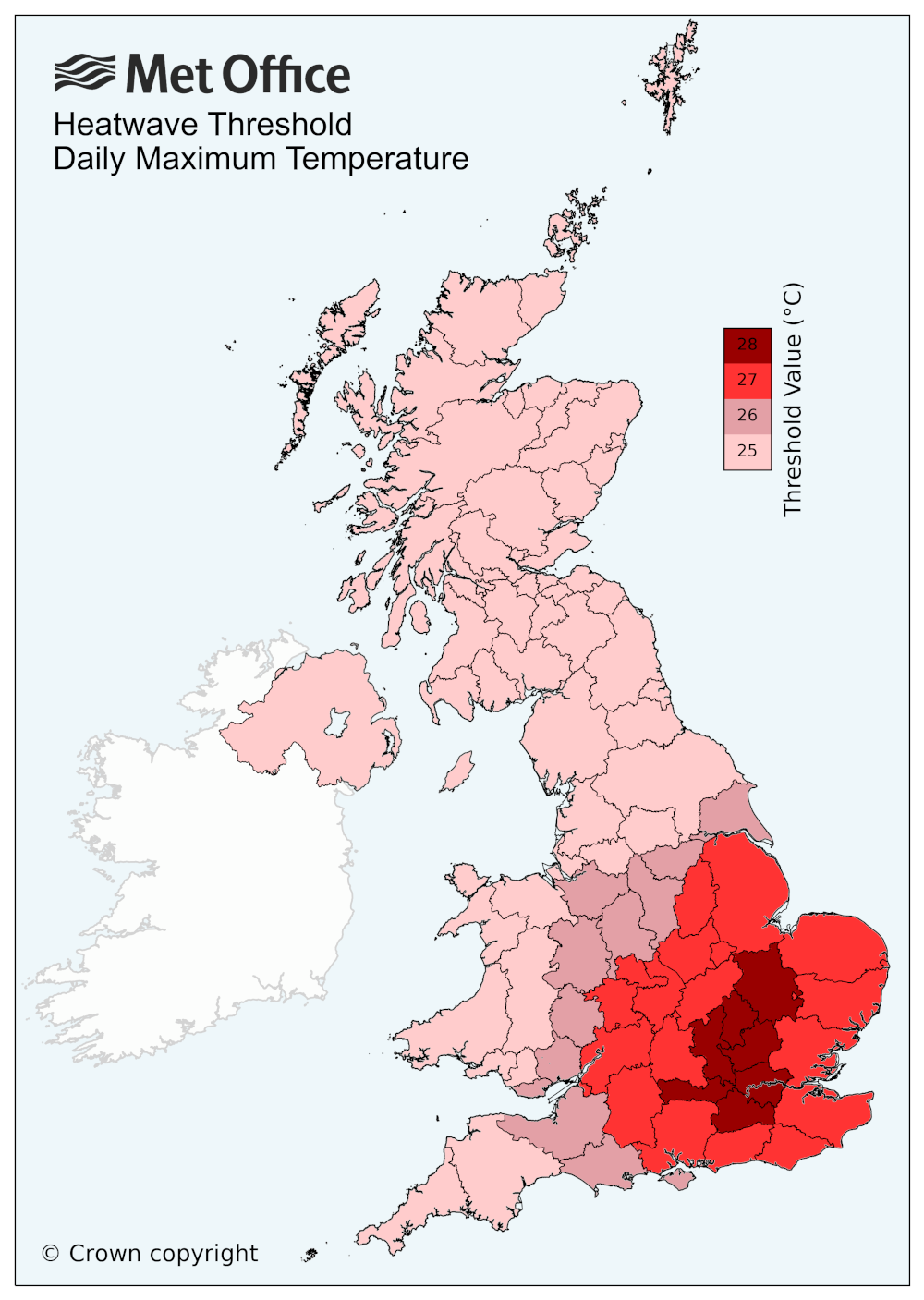
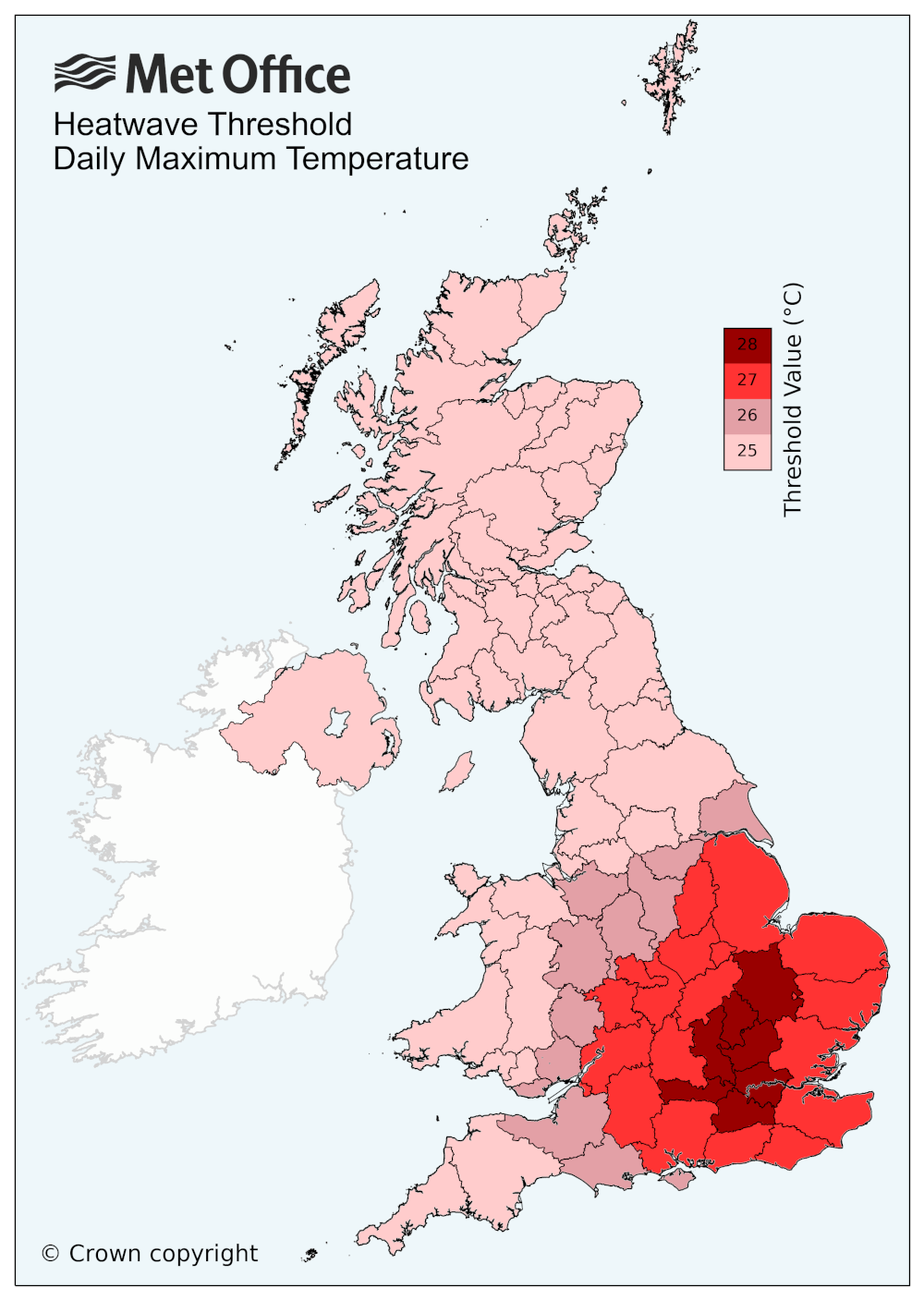
In the UK, a heatwave is officially defined as a location recording at least three consecutive days with daily maximum temperatures meeting or exceeding the heatwave temperature threshold. This threshold varies by county, reflecting the diverse climate across the UK.
Staying warm into next week
The warmest conditions are likely into early next week, when temperatures could peak again across southern and southeastern England on Monday and Tuesday. There is, however, uncertainty on how quickly conditions will begin to cool thereafter.
Staying safe in cold water
People heading to the coast should be mindful that sea surface temperatures are not as high as they would be in mid-summer. The Royal Life Saving Society UK (RLSS UK) has free, accessible water safety resources available, as part of drowning prevention week this week.
You can find water safety advice on our website and in the refreshed Met Office app, now featuring a dedicated beach forecast with tide times, wave heights and sea-surface temperatures, as well as guidance on UV and pollen levels.
You can find the latest forecast on our website, on YouTube, by following us on X and Facebook, as well as on our mobile app which is available for iPhone from the App store and for Android from the Google Play store.

Met Office