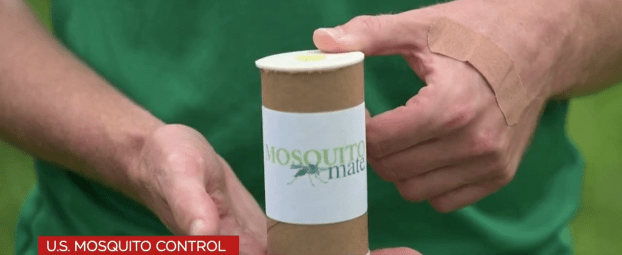
US Company Releases 600,000 Male Mosquitoes in New Effort to Control Disease-Carrying Species
WASHINGTON — Hundreds of thousands of specially treated male mosquitoes are being released into residential neighborhoods in the Washington area as part of an innovative effort to reduce populations of disease-carrying mosquitoes without relying heavily on chemical pesticides.
A US mosquito-control company plans to release approximately 600,000 male mosquitoes across the region by the end of the summer, targeting the invasive Asian tiger mosquito, scientifically known as Aedes albopictus.
The released mosquitoes are males, meaning they do not bite humans. They carry a naturally occurring bacterium known as Wolbachia, which scientists have used as a biological tool to disrupt mosquito reproduction.
When the treated males mate with wild female Asian tiger mosquitoes, the resulting eggs fail to hatch, helping to reduce the mosquito population over time.
Targeting an Invasive Mosquito Species
The program specifically targets Aedes albopictus, commonly known as the Asian tiger mosquito because of its distinctive black-and-white markings.
The species is considered invasive in the United States and is capable of transmitting several serious diseases, including dengue, Zika and chikungunya.
Unlike conventional mosquito-control methods that may involve widespread pesticide spraying, the Wolbachia approach is designed to target a particular mosquito species.
Supporters say this could provide a more environmentally focused way of controlling mosquito populations while reducing the use of chemicals around homes, gardens, pets and waterways.

Wolbachia is a bacterium that occurs naturally in many insect species.
Scientists have developed different ways of using the bacterium to control mosquitoes. In this program, male mosquitoes carrying a specific strain of Wolbachia are released into areas populated by wild female tiger mosquitoes.
When the two mate, biological incompatibility prevents the eggs from successfully developing and hatching.
Because only male mosquitoes are released, the program does not introduce additional biting mosquitoes into residential neighborhoods. Male mosquitoes primarily feed on plant nectar rather than blood.
Over repeated releases, researchers hope the process will significantly reduce the number of Asian tiger mosquitoes in targeted areas.
Thousands Released Every Week
Around 25 households have reportedly signed up for the residential program.
Participating properties receive approximately 1,500 male mosquitoes each week for 16 weeks, allowing large numbers of treated males to continuously compete with wild males for mates.
The company behind the initiative says the project represents the first residential mosquito-control service of its kind in the United States.
The company expects to release around 600,000 mosquitoes across participating areas by the end of the summer.
An Alternative to Chemical Spraying
For some residents, one of the biggest attractions of the program is the possibility of reducing dependence on traditional insecticides.
Chemical mosquito-control products remain widely used, but concerns about their potential impact on other insects and the surrounding environment have encouraged scientists and mosquito-control companies to explore more targeted alternatives.
Residents participating in the program say they were attracted by an approach that seeks to reduce mosquito numbers biologically rather than through repeated chemical spraying.

Despite growing interest in Wolbachia-based mosquito control, researchers caution that its effectiveness can vary depending on local environmental conditions.
Mosquitoes from surrounding untreated areas can move into neighborhoods where releases are taking place, potentially reducing the overall impact.
Geography, weather, mosquito density and movement between neighborhoods can therefore influence how successful the strategy becomes.
Wolbachia technology has also been studied internationally for another purpose: reducing mosquitoes’ ability to transmit viruses such as dengue.
Researchers continue to examine how the technology can be used effectively at larger scales and under different environmental conditions.
Demand Growing for New Mosquito-Control Approach
The residential program has reportedly reached capacity for this year, with reservations already being accepted for 2027.
The growing interest comes as governments, scientists and communities around the world search for new ways to combat mosquito-borne diseases while reducing dependence on conventional pesticides.
While researchers say further assessment is needed to determine how effectively residential releases can suppress mosquito populations across wider areas, the Washington initiative provides a glimpse of how biological mosquito control could increasingly become part of efforts to protect communities from invasive, disease-carrying species.
The post US Releases 600,000 Mosquitoes to Fight Mosquitoes first appeared on Radio Dalsan.